Mrs. Ullman - GE Fuel Cells - 3/1/16
Fuel cells make a useful electrical energy source or battery alternative for vehicles and homes. They benefit society by providing a method of very cleanly generating electricity using hydrogen.
Government/Economics Connections:
• Investment Tax Credit - Taxpayers can claim 30% credit of expenditures for fuel cell power plants, among others
• Fuel cells provide another government talking point for alternative energy
Presenter connections:
• Dr. Borton, Wei Ji, Scoavello Scovello - energy
• Dr. Borton, Dr. Katz - environment
Summary:
Mrs. Ullman talked about what fuel cells are, how they work, their history, why they are beneficial, and their different fuel sources. Fuel cells use hydrogen and oxygen along with an catalyst to influence a redox reaction that produces electricity, heat, and water. There are quite a few benefits to using fuel cells to generate electricity, including having low emissions, not being intermittent, having fuel flexibility, and being very efficient. They are quiet, run longer than batteries, don’t have to be recharged like batteries, and have high energy density. One added benefit can be “grid firming,” which essentially can create a less intermittent backbone for the renewable energy grid of the future, or even for renewable sources now.
There are quite a few different kinds of fuel cell technologies, all for different uses, that all have different advantages and disadvantages. Polymer Electrolyte Membrane (PEM) FCs have low temperatures, have solid electrolytes, and have quick startup times, to make them better suited for portable use, but they can have expensive catalysts. These can be used to power things like laptops and phones. Alkaline FCs have a wider range of stable materials, making them a cheaper alternative to PEMs, but are sensitive to CO2. These can be used to power 100kW cars and 200kW buses. Phosphoric Acid FCs are better for distributed generation, and have expensive catalysts, but an increased tolerance to impurities. Molten Carbonate and Solid Oxide FCs are great for electric utility and distributed generation, have high efficiencies, are suitable for CHP (combined heat and power), but have long startup times. Fuel cells in distributed power scenarios can be used for on-site power, substation power in the grid, power in developing regions without having to create a large network, and they can also be retrofitted for existing gas engine customers of GE.
Hydrogen can be made a number of different ways, including natural gas reforming, coal gasification, biomass gasification, renewable liquid fuel reforming, high temp water splitting, electrolysis, and through new photolytic processes. The most common method is steam methane reforming, which takes CH4 and H2O to make H2. Obviously these methods come with their own drawbacks, and they may contribute their own environmental effects. The logistics of hydrogen fuel also contribute, because refueling stations have to be built for vehicles, and fuel has to be bottled and transported. Overall, the fuel cell is a very interesting alternative energy source that has already made its way into many industries, and that will continue to grow in the future with GE’s help.
Terms:
• Fuel cell - converts chemical energy to electrical energy using a redox reaction that produces electrons and H2O
• Grid firming - account for energy changes due to intermittent energy sources such as wind and solar
• Electrodes - anode and cathode are negative and positive conductive terminals
• Electrolyte - carries charged particles from one electrode to the other
• Combined heat and power - fuel cell generating electricity as well as useful heat
• Reaction
o Anode Reaction: 2H2 + 2O2− → 2H2O + 4e−
o Cathode Reaction: O2 + 4e− → 2O2−
Overall Cell Reaction: 2H2 + O2 → 2H2O
Thursday, March 10, 2016

Fuel Cells
Fuel Cells
Engineers and manufacturers create fuel cells. Fuel cells are used to provide a
more environmentally safe and cost effective way of powering electrical
equipment than conventional batteries. In the specific case of fork lifts, fuel
cells have 75% of the run time of a battery but are much quicker to fuel up
then to change the batteries every few hours. They also save space and reduce hazards at
facilities that rely on fork lifts.Structure and Function:
The membrane
electrode assembly is made of 3 different layers. The MEA is sandwiched between
two bipolar plates that conduct electricity between the cells and provide the
cell with a strong structure. The MEA is made up of membrane, catalyst and gas
diffusion layers. For the catalyst [D1] layer,
platinum is applied across the polymer electrolyte membrane to facilitate the chemical
reactions. The platinum catalyst allows
the hydrogen to be split into electrons and protons. The protons go through the
MEA while the electrons go through a circuit where they are harnessed to do
electrical work. The gas diffusion layers sit outside of the catalyst layer and
facilitate the removal of hat and water.
Fueling Stations:
-
- Most hydrogen in US comes from reforming natural gas
- Uses a small valve
- If pressure goes higher than 6600 psi, it needs
pressure relief
- Made larger so they are easier to service
- Takes 2 minutes to refuel compared to 15 minutes to
switch batteries
Skid
-Twenty feet skid outside at customer site -Tanks take
liquid hydrogen out and compress it -All of the valving connects the tubes to
the dispenser -Starts with lowest pressure first
Plastic water tank:
-Gets heavier as it runs
-Hydrogen from
tank and air from atmosphere, gains 10 lbs of oxygen while it runs
- Combines to make water
Maintenance:
- Every 6 months to a year
- Change the coolant every 10,000 operating hours
- Fix hydrogen leaks
Design verification testing
-30*C to 40*C
-22*F to 100*F
-Fuel cells
need to be heavy to help stabilize fork lifts (solid steel added)
Terms :
Membrane electrode assembly
Bipolar plates
Lithium ion battery
Skid
Stacks
Fuel cells
Catalyst
Regulator
Coolant
Dispenser
Compresses
Valves
Electrolyzer
Hydroelectric
Voltage
Membrane
Diffusion
Connections:
Dr. Karatkar- lithium ion batteries
Dr. Katz- alternative energy
Dr. Borton- alternative energy
Dr. Ullal/ Palermo- polymers
Joe Imbrogno- made a membrane
Dr. Wei - conduction
Dr. Koratkar- lithium ion battery
Dr. Silva- chemical processes
Monday, February 8, 2016
Carbon Sequestration part II
Overall summary:
There are many ideas for sequestering carbon, these include
storing it in geological formations, pumping it into the ocean (liquid CO2 is
denser than water), injecting it into the seabed, transforming it into
thermodynamically stable minerals, or doing an ‘active earth intervention’ such
as iron fertilization. Dr. Watson talked
us through the pros and cons of these methods, their viability, and his
opinion. Dr. Watson’s message was similar to Dr. Katz’s
– the earth will survive a very high amount of atmospheric carbon, but it’s
doubtful that the current number of
humans can.
Terms
- Iron Fertilization- Spreading iron into the ocean
to increase the population of phytoplankton Phytoplankton blooms remove
CO2 through photosynthesis. This has been tried on the small scale, but
like any ‘active earth intervention’ or ‘geoengineering attempt’, people
are reluctant to try to actively change the environment dramatically to
correct for how we already dramatically changed the environment.
Prevention seems like a safer approach. Nonetheless we may eventually need
this type of interaction. Other ideas such as using space mirrors to reflect
sunlight or putting an anti-greenhouse gas in the atmosphere have also
been proposed
- Acidification- Increased CO2 levels in the
ocean will increase the level of acidity, possibly harming wildlife. Much aquatic life relies on CaCO3
(mollusks, coral, etc.) and higher acidity dissolves this.
- GeologicalCO2 injection- Injecting CO2 into areas
below the earth, sequestering the CO2 into the pockets vacated by oil
drilling. (Long Term Storage)
- Sub-Oceanic Sequestering- Pumping liquid CO2 to the
bottom of the ocean, where it will settle to the bottom and stay in
relative storage, like a giant lake. There are concerns about this because
of ocean acidification, and stability of these giant lakes of CO2
- Sub-sediment storage – pump CO2 below seafloor making
CO2 hydrate. This seems likely to
have the least environmental impact, but issues come up such as who owns
the ocean, who funds this, can we really know the long term environmental
impact?
- Geothermal gradient
- the temperature of the earth increases dramatically as we go down
through the crust. The center of the earth is as hot as the surface of the
sun. At high pressure CO2 is liquid
Eco and Gov
- There are economic costs to all of these solutions, but
almost no short term return.
- This is an international problem, so it’s not easy to assign
or accept responsibility – fiscally or otherwise
- To be successful, there needs to be huge government
initiative and funding.
- Reusing spent oil wells to pump the liquid CO2 into
deep cavities
Connections
- Mimi Katz-Environmental
- Dr. Borton-solar
- Dr. Borton-Environmental
SEM
As part of your HW due Wednesday 2/10, post a comment here. The comment should be a link to the coolest SEM picture you can find online.
Be sure to include: Your name and a description of what we are looking at. No duplicates!
Be sure to include: Your name and a description of what we are looking at. No duplicates!
Carbon Sequestration - One of two student blogs
Carbon Capture
Dr. Watson
Earth and Environmental Science
Earth and Environmental Science
1/22
For millennia,
the earth atmospheric carbon has naturally cycled from 180 to 280
ppm. Right now it is beyond 380 ppm. Carbon
dioxide is 84.8 percent of all emissions. We release so much that we measure it in
teragrams. (10 to the 12th power) Natural sources of carbon dioxide are forest fires and volcanoes.
Other sources include fossil fuels, non-energy fuel use, iron and steel
production, cement manufacture, natural gas systems, municipal solid waste
consumption, petroleum, coal, etc. Electricity generation works mainly with
coal, while petroleum is used for transportation and is used the most. These are isotopically different than fossil
fuels, so we can tell the source of carbon in the atmosphere.
Carbon
Dioxide can be captured by pulling it
out of the atmosphere. This is not currently regarded as practical or
economical CO2 can be captured or reduced by power plants and industrial
facilities at the “point source”. Three approaches to do so are post-combustion
capture, pre-combustion capture, and oxy-fuel combustion capture. Once
captured, pure carbon dioxide can be stored geologically, in oceans, or through
mineralization.
Terms:
- Geologic storage: place carbon dioxide into empty oil and gas wells
- Ocean storage: Large capacity to absorb carbon dioxide, but changes pH of ocean
- Mineral carbonation: make solid carbonates by essentially reversing the process used to make cement. CaO (lime) or MgO + CO2 à CaCO3 or MgCO3 + heat. This is exothermic, so once started, the reaction should continue, but it’s hard to drive the reaction to completion. Researchers are working to make this process efficient and successful.
- Post-combustion capture: waste gas is scrubbed of carbon dioxide
- Pre-combustion capture: fossil fuels oxidized in gasifier, take CO2 out and then burn the fuel in hydrogen. This is complex chemistry and currently expensive
- Oxy-fuel combustion capture: burned with oxygen rather than air so that the waste stream is pure CO2 which is easier to capture and store.
- Carbon carousel: a device with fiber mats that rotae and pull CO2 out of the air, making bicarbonate. The bicarbonate can then be made into a solid as benign as sodium bicarbonate. Right now this is just a prototype.
- Sequestration:
Connections:
Katz-
climate change
Ji- nuclear
energy
Borton-
solar energy
Thursday, February 4, 2016
Wind Energy
Be sure to know what the Production Tax Credit is, why it's important, and how much it is per kwh.
Be sure to be able to label the parts of the wind turbine: http://engineeringyourworld.pbworks.com/f/Wind+turbine+diagram+3.gif
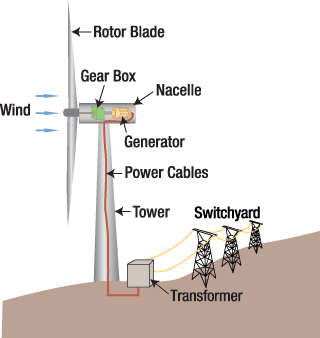
Wind Technology and Renewable Energy
2/2/16
Overall
summary:
Terms and
Concepts:
·
- Wind energy is the most viable, renewable technology in the immediate future. Solar may eventually be, if we could make it more cost effectively.
- · Rotor- blades of turbine, made of carbon fiber and a fiberglass ‘skin’, similar to a surf board.
- · Vertical vs. horizontal axis turbines – both work, but the traditional horizontal axis is more efficient in terms of costs
- · Offshore Wind- best source of wind energy but is opposed by coastal communities and is very expensive to install or repair if necessary
- · The “Electric Grid”- first electricity distribution system in NYC set up in a grid pattern
- · Smart Grid- technologies for energy storage and demand side management
- · Tower
- · Machine head
- · Gearbox
- · Hub
- ·
- Grid instability is a huge issue with renewables. This continues to be a big problem in Maui. Cost effective electrical energy storage could be very helpful in this. People are trying to improve batteries and make different types of electrical energy storage more cost effective, for example fly wheels. Demand side management can also help with this. Think of the grid like a water tank. If less than 60 hz, have a brown out – causing machines and electronics to run slowly, overheat, and burn up.
- · Grid capacitance - the wires in the grid itself hold some electrical energy that gets quickly, but not immediately drained when power goes down.
Economics:
- · PTC (production tax credit)- limiting factor for the growth of wind power – about 1.5 to 2 cents per kwh. Without this subsidy, it’s hard for wind to compete with coal and natural gas, which cost only about 4 cents/kwh to produce (sell to consumers for about 12 cents/kwh). When Congress has to renew this yearly instead of enacting it for a longer period of time, the industry becomes unstable. (Suppliers and customers are afraid it won’t be renewed and will no longer be a dependable source of revenue.)
- · As turbine size increases, the cost of its energy decreases (economies of scale)
- · Building more towers in one location is more cost effective (spreads out overhead costs and installation costs)
- · Cost benefit of using 3 bladed turbines as opposed to more blades
- · Vertical axis turbines are cheaper to install but have lower output (cost tradeoff)
- · Almost none of the GE wind turbine is manufactured in US. They even by generators from China.
Connections:
·
Dr.
Borton spoke about the viability of solar energy, another renewable source
·
Previous
presentations on climate change showed that alternative energy such as wind
will become necessary
·
Gearing and Lego project
Carbon Sequestration
I'm still missing two blogs for this :-(
Be sure to think about:
Be sure to think about:
- ** Tera and other metric prefixes
- carbon capture
- *** carbon sequestration
- geological formation
- ocean
- seabed
- transform to minerals
- iron fertilization
- ***active intervention
- iron fertilization
- mirrors in space
- anti greenhouse gas in air
- geological storage
- mineral carbonation
- storage in ocean
- isotopes from volcano different than from fossil fuel
- ***3 ways to reduce carbon at point sources
- carbon carousel
- **reversal of cement making process
- voxels - relate to Mr. Dehnert
- How to read a phase diagram
- CO2 hydrate
- ***ophiolites and their use
Multi Body Dynamics
No blog was assigned.
Be sure to think about:
Be sure to think about:
- * Social value of mathematical modeling
- * role of chaos in mathematical modeling
- degrees of freedom (connection to robot arm in MILL)
- Cray decade
- * fly by wire
- * what it means to be meta stable
- * definition of "inverse problem"
- * n as dynamic degrees of freedom; m as number of constraints and what these variables do to the complexity of a problem
- relationship to Dr. Chen (ribosome simulation)
- relationship of Mars Rover to our heart valve project
- RuBisCo
- Custom built antibiotics (relates to Dr. Chen and Dr. Belfort)
- Complex modeling (relates to Dr. Katz)
- * relationship between dynamic equations, numerics, and computer science and the value of different ways of doing math compared to more computing power
- F=ma
Monday, February 1, 2016
Climate Change Impact
Climate Change: Impact
Recently we have seen
the effects of climate change in the news. 2015 was the hottest year on record.
This astonishing fact should be a wakeup call to our generation. If we do not
make a conscious effort to halt the temperature rise, there will be detrimental
consequences. We are already seeing the impacts of climate change around the
world.
Antarctica- Because of rising temperatures, glaciers are
melting. The artic sea ice, during 2015, was recorded to be the lowest on
record. Eventually, the west Antarctic ice sheet could be melted. If all of the
sea ice melts that means more heat will be absorbed by the planet. Large ice
sheets covered in snow reflect up to 85% of sunlight. Dark ocean water only
reflects 7%. Therefore, melted ice (water) absorbs more heat and continues to
melt even more ice because surface temperatures increase. This also raises sea
levels.
Permafrost- Rising temperatures are also causing frozen ground in
the arctic to thaw. This thawing is releasing carbon dioxide and methane gas
from the ground. These gases add to the greenhouse gases in the atmosphere and
cause more warming which causes more melting.
Plant and Animal Ranges: We are seeing shifts in the ranges of plants
and animals, with species moving farther north and growing seasons increasing
in areas farther away from the equator. Unfortunately, this also means that
historically fertile areas in the southern part of the northern hemisphere are
becoming too hot and dry to sustain the large quantities of food they have typically
produced. The longer growing seasons near the poles are not enough to mitigate
this.
Social
Impact: Future America- As the
climate continues to change the United States can expect to get no snow
starting sometime between the years of 2041-2070. Less snowpack will mean a
lower water supply because there will not be any snow melting into fresh water
sources. However, sea levels will continue to rise, and will rise more than 1.2
meters by 2100. There will be more plant and animal range shifts which will
affect ecosystems. Birds will fly farther north and growing seasons will be
longer. All of these factors will affect population, resources, ecosystems,
etc.
Government
and Economics- Future impacts of
climate change will depend on if we take action or not. Our generation must
decide whether we are going to elect people that believe in preserving the
environment we have now or people who are willing to “adapt” rather than take
“corrective” action. Politicians will need to look for an incentive to get
people to change their lifestyle. It is difficult to address climate change
when the impact is perceived to be in the distant future and when the challenge
requires global cooperation.
The economic costs of climate change are
already believed to be taking place with storms becoming larger and moving into
areas that are not historically impacted, so are not well prepared. As fertile areas become too hot to produce
enough food, scarcity becomes an issue. As the earth warms, fresh water becomes
less available increasing competition for water sources. While some areas will benefit from climate
change (for example, northern Canada when shipping lanes open up due to ice
melt) other areas are expected to take a large economic hit.
Vocabulary-
Permafrost: layer of frozen soil in
Polar Regions
Insolation: solar radiation (energy)
from the sun that reaches the earth’s surface
Orbital climate forcing: cyclic
variations in earth’s orbit that affect climate
Anthropogenic: because of human activity
Methane hydrate: methane trapped in ice
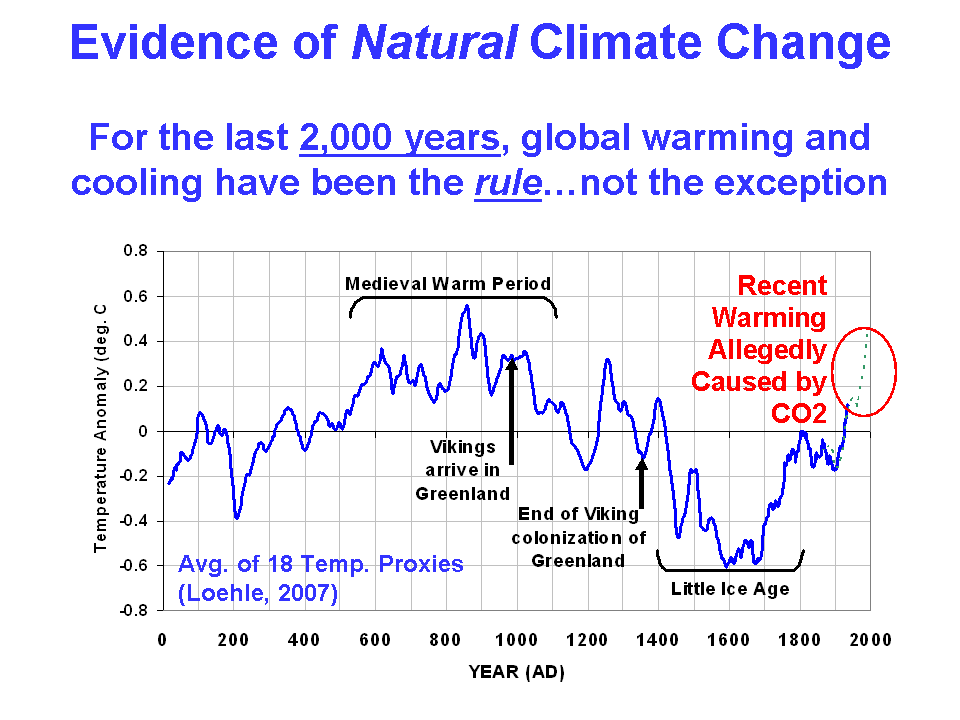
Be able to read about climate change and see if the evidence provided is of high quality or not. For example: http://www.forbes.com/sites/jamestaylor/2011/10/12/a-case-against-climate-change-alarmism/#3845f9ad61fd
Evidence of Climate Change
Climate Change - EVIDENCE
Dr. Katz (Earth and Environmental Science, RPI)
01/20/16
Dr. Katz gave a lecture explaining to the class
the evidence behind why climate change is happening along with the possible
future impacts. Different types of evidence, gathered all around the world,
showed a similar trend. The evidence included graphs showing different types of
gasses such as CO2 and CH4, both of which are greenhouse gasses. In the natural
cycle of glacial and interglacial periods on earth, the amount of these gasses should
be decreasing based on what Dr. Katz showed us based on evidence found in ice
cores. This was based on evidence showing the Earth’s climate moving in a
cyclical pattern of the amount of greenhouse gases in the atmosphere along with
the surface temperature over time. Based on the traditional pattern of the
Earth's climate the temperature and amount of greenhouse gasses should be
decreasing but instead they are reaching record levels in recent history.
This is very important to society because as the
climate changes, it causes multiple aspects of society to change, such as but
not limited to: the economy, agriculture, need for new construction and an
overall effect on how the government has to spend money in many areas.
For the government, climate changes will affect
many departments and agencies on many levels. Including research and
development of cleaner and more efficient ways to obtain and use energy. Making
sure that the infrastructure can withstand the changes in weather patterns such
as stronger storms, also needed to be studied. Also, the government faces a huge challenge in
trying to unite politicians both nationally and internationally in accepting
and spending money in response to the potential long term effects of climate
change.
As was previously stated in class, the
environment is not part of the economy, the economy is part of the environment[D2] . The economy will be affected in many ways due to the fact that
many different types of goods and services will be affected by a changing
climate. The food industry is being affected greatly with agriculture having to
change because farmers have to plant differently due to differences in weather caused
by changes in climate.
Greenhouse Gasses - These are gasses that trap
heat from the sun in the atmosphere causing the overall temperature of the planet
to increase. These gasses include carbon dioxide, methane and water vapor.
CO2- Carbon dioxide, greenhouse gas that was
projected to decrease but started to increase around 10,000 years ago when it
was believed that there was major deforestation caused by humans. CO2 greatly
increased in the mid to late 19th century and has rapidly increased ever since
then.
CH4- Methane, greenhouse gas that was projected
to decrease until about 5000 years ago when agriculture left the fertile
crescent and grew across the continents. This coincides with an increase in
rice paddies which produce large amount of methane. It is still increasing
today due both methane from livestock, along with a larger amount of
agriculture such as rice paddies.
Ice Cores - A large columns of ice that
researchers drill to see what the atmosphere was like over time in both the
amount of greenhouse gases and temperatures.
ppm-
Parts per Million. The unit used for the amount of a gas in the atmosphere.
This is similar to percent (parts per
hundred).
Mauna Loa Observatory - In mid 20th
century in Hawaii the amount of CO2 in the atmosphere was recorded and has been
researched continuously since then. It was found that the graph of the data was
that the PPM of CO2 is increasing exponentially.
Natural Variability - The Earth has an average natural
variability of CO2 in the atmosphere based on the previous climate cycles
studied from ice cores. The natural variability for CO2 is 180 to 280 ppm.
Instead today CO2 is over 400 PPM.
·
Keeling Curve
·
Methane hydrate and idea
that top 3 m of permafrost contain more
carbon than in entire atmosphere now
·
Can trace volcanic
carbon that is isotopically different from carbon released from fossil fuels
·
El Nino and La Nina don’t
explain overall changes we are seeing
·
Satellite evidence of
earth’s temperature changes
·
Top 10 hottest years on
record occurred since 1998
Connections
Dr. Borton, Using solar energy as a possible way to reduce the impact of and limit
climate change in the future.
Cleanroom, The manufacturing of photovoltaic
cells aka “solar cells” use for solar energy as a way to reduce climate change
in the future.
**Be able to read about climate change and see if the evidence provided is of high quality or not. If so, be able to list facts that show why you agree. If not, be able to list facts as to why you disagree. For example, what evidence do you have to agree or disagree with the conclusions implied by this chart: http://www.weatherquestions.com/Loehle-2000-yr-proxies.gif**
Links
Amount of CO2 in the atmosphere and the
temperature over time.
Climate Projections
Fission and Fusion
Name: Dr. Wei Ji
Department:
MANE at R.P.I.
Topic: Nuclear Energy
Date:January 19, 2016
Social Value:
Energy is an important part of our daily lives.
It’s how we heat our homes, run our electronic devices, and get from
place to place. Our society relies on fossil fuels for most of our
energy, however, eventually these will run out. We have to start relying
on other forms of energy so that we are better prepared for when they run out.
Nuclear energy is a possible solution to this because it is abundant,
more cost effective, and doesn’t cause air pollution. It is impacted
socially though by the fear of past nuclear scares like Chernobyl, Three Mile
Island, and Fukushima. Because of these, not many people are eager to increase
our reliance on nuclear power.
Government Connection:
Energy production is monitored and regulated by
the Department of Energy which is part of the federal government. Government
policy also has a huge influence on energy development. The government can use
subsidies and taxes to strongly influence the type of energy used in the
nation. For example a tax on carbon emission would have a huge negatie impact
on the economic sustainability of coal and natural gas power plants, making
nuclear power seem more financially appealing. Also, the government could ease
zoning restrictions and use tax incentives to make way for nuclear power
plants. Energy also correlates
with government candidates. A politician running for office who is
pro-environment will get different supporters than someone who is pushing for
infrastructure build up. The government also affects how much money will go towards
energy research and support in the federal budget. As energy continues to
change in what is primarily used, the amount in the budget may also need to
change.
Economics Connection:
- Federal Budget Change (as said before)
- Gas prices will increase as the supply decreases
(supply and demand)
- Nuclear fuel is more cost effective if used instead of
fossil fuels(if start up costs and nuclear waste storage are not
included.)
Guest Connections:
- Dr. Borton- alternate energy and economies of scale
- Dr. Katz- climate change and possible solutions
Terms/Concepts:
- Control rods
- Cladding
- Spent fuel
- Reprocessing
- Condenser
- Turbine
- Nuclear fission- If the nucleus of a heavy atom
(Uranium, Thorium) absorbs a neutron, the nucleus becomes unstable and
splits.
- Nuclear fusion- Tritium + Deuterium becomes neutron
+Helium (Happens on the sun)
- Uranium -Heavy atom used in fission reactions
- U235 – isotope that undergoes fission
- U238 – non fissionable. The majority of mined U is U
238. To concentrate enough U235, we
need to “enrich” uranium.
- Thorium-Heavy atom used in fission reactions (can’t
create nuclear weapons)
- **Critical- The plant is at a normal level – just enough
to sustain a controlled nuclear reaction
- Sub-critical- The energy output is not efficient enough
to sustain nuclear fission
- **Super Critical- Too muh energy is being produced,
usually not a safe point. – uncontrolled fission (melt down possible)
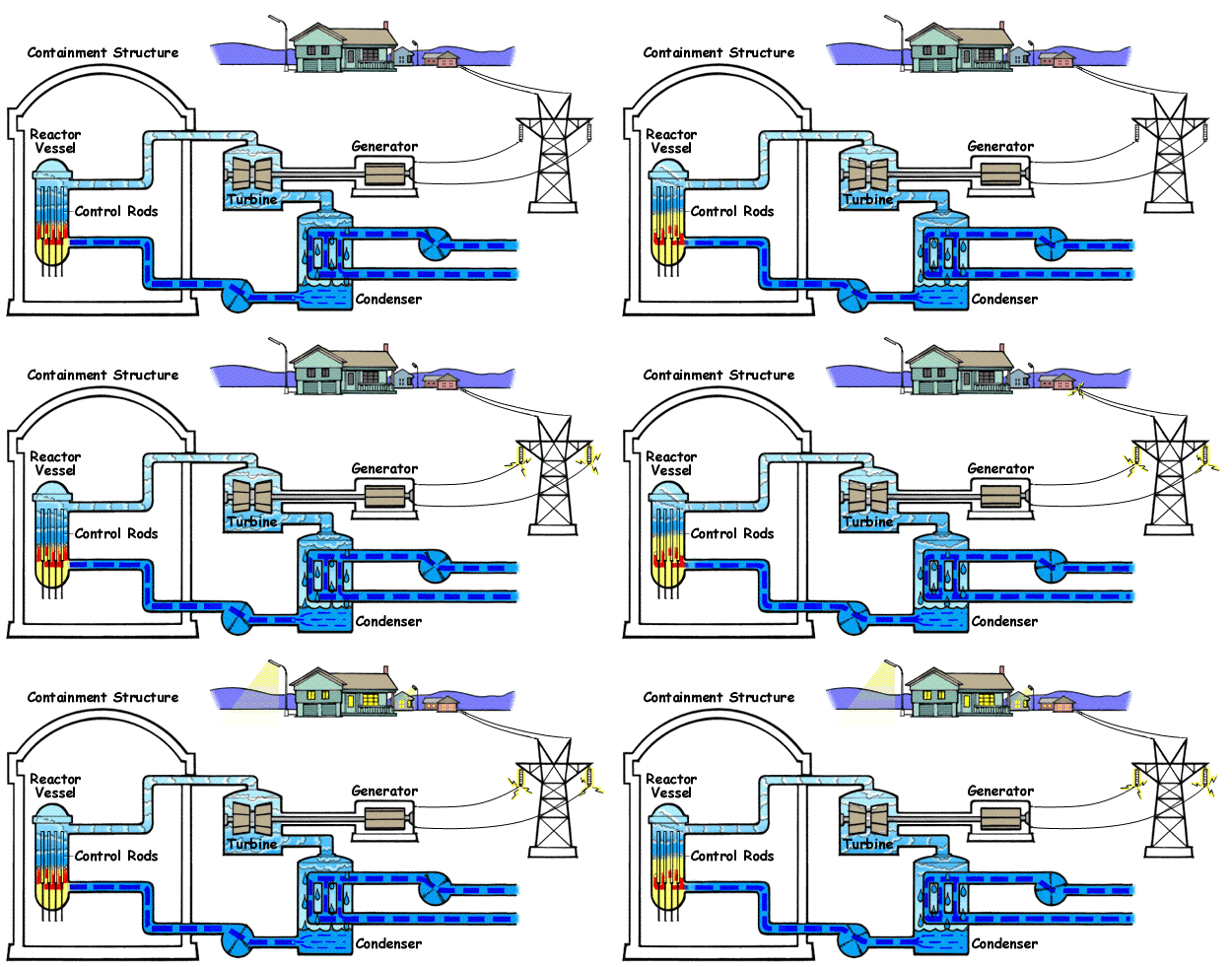
- Boiling Water Reactor- One reactor that changes water density
and temperature to produce energy (usually for electricity) Radioactive
water comes in direct contact with turbine, but not with environment.http://www.nrc.gov/images/reading-rm/basic-ref/students/student-bwr.gif
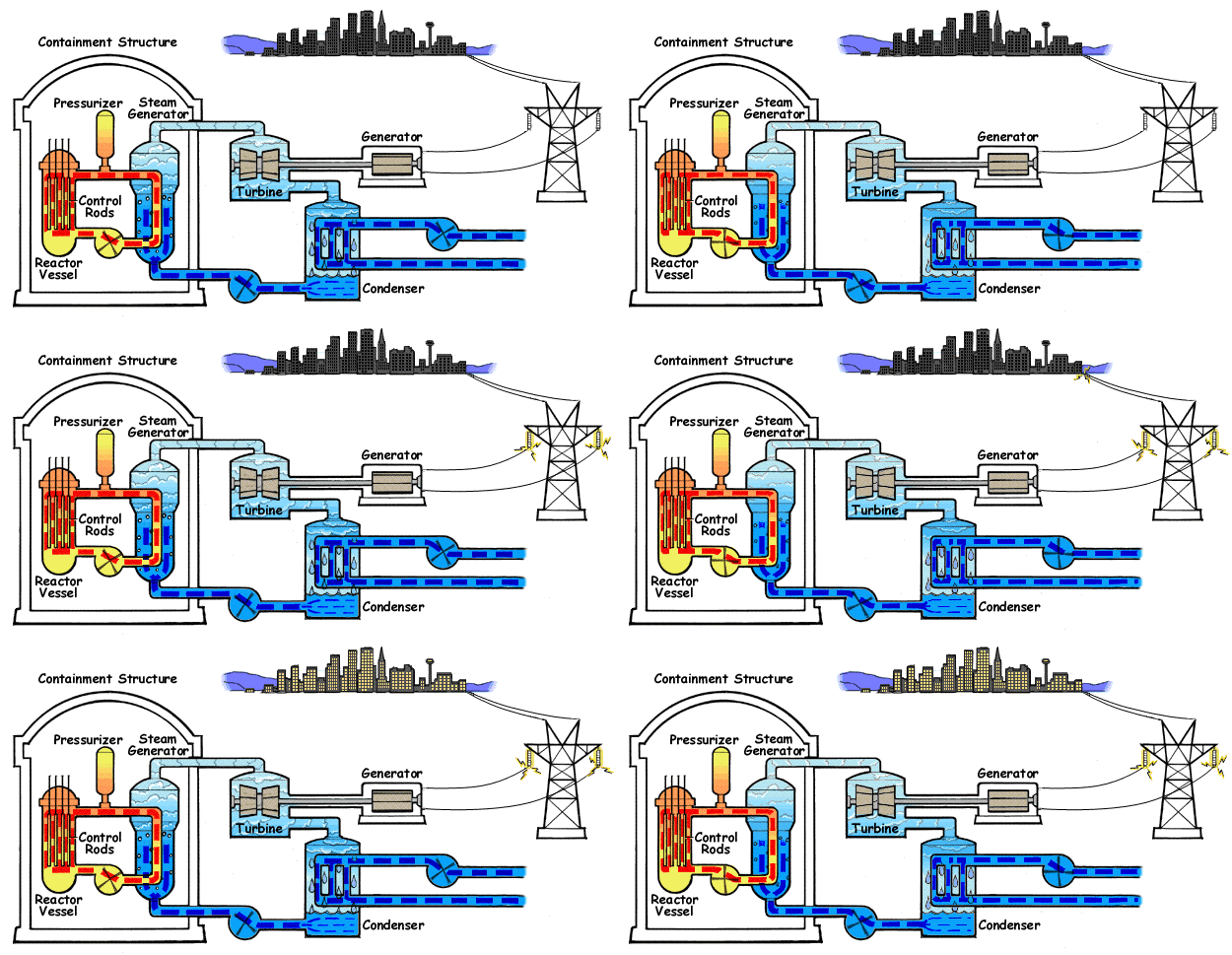
- Pressurized Water Reactor- A thermal reactor where
steam is produced through heat exchange rather than the core so that
radioactive water does not come into direct contact with the turbine (also
usually for electricity)https://upload.wikimedia.org/wikipedia/commons/a/a0/PressurizedWaterReactor.gif
- Containment- One of the most critical parts of a
nuclear power plant. Usually a building around the reactor
- Fuushima- Location of nuclear meltdown in Japan where
the cooling system failed
- TOKAMEK- First fusion test reactor in Russia
- ITER- International project involving building a fusion
reactor to test the concept. This is taking decades to build and is funded
by many nations, This is a ”TOKAMEK” type of fusion reactormeaning it means a
particular type of magnetic confinement to get plasma up to 150 degrees C
- Reactor Core- Part of the
reactor that contains the fuel and allows reactions to take place
Questions to think about
(from Tammie):
·
- How is a nuclear power plant like a coffee pot?
- ***How is electrical energy made from heat in general? How do turbines, steam, generators, and heat exchangers play a role? This corresponds to what you learned on your energy posters too!***
- · What is a heat exchanger and how does it work (in a very general sense)
- **** We can break apart nuclei to get energy (fission). We can combine nuclei to get energy (fusion).How can that be? It would seem that we should be able to get energy out only one way or the other – putting things together or taking them apart. What gives? Hint: http://hyperphysics.phy-astr.gsu.edu/hbase/nucene/nucbin.html http://chemed.chem.purdue.edu/genchem/topicreview/bp/ch23/graphics/23_7fig.gif

Just FYI from the
Smithsonian, “The Kola Superdeep Borehole was just 9 inches in diameter,
but at 40,230 feet (12,262 meters) reigns as the deepest hole. It took almost
20 years to reach that 7.5-mile depth—only half the distance or less to the
mantle. Among the more interesting discoveries: microscopic plankton fossils
found at four miles down. The Kola hole was abandoned in 1992 when drillers
encountered higher-than-expected temperatures—356 degrees Fahrenheit, not the
212 degrees that had been mapped.”
Subscribe to:
Posts (Atom)