Name: Dr. Wei Ji
Department:
MANE at R.P.I.
Topic: Nuclear Energy
Date:January 19, 2016
Social Value:
Energy is an important part of our daily lives.
It’s how we heat our homes, run our electronic devices, and get from
place to place. Our society relies on fossil fuels for most of our
energy, however, eventually these will run out. We have to start relying
on other forms of energy so that we are better prepared for when they run out.
Nuclear energy is a possible solution to this because it is abundant,
more cost effective, and doesn’t cause air pollution. It is impacted
socially though by the fear of past nuclear scares like Chernobyl, Three Mile
Island, and Fukushima. Because of these, not many people are eager to increase
our reliance on nuclear power.
Government Connection:
Energy production is monitored and regulated by
the Department of Energy which is part of the federal government. Government
policy also has a huge influence on energy development. The government can use
subsidies and taxes to strongly influence the type of energy used in the
nation. For example a tax on carbon emission would have a huge negatie impact
on the economic sustainability of coal and natural gas power plants, making
nuclear power seem more financially appealing. Also, the government could ease
zoning restrictions and use tax incentives to make way for nuclear power
plants. Energy also correlates
with government candidates. A politician running for office who is
pro-environment will get different supporters than someone who is pushing for
infrastructure build up. The government also affects how much money will go towards
energy research and support in the federal budget. As energy continues to
change in what is primarily used, the amount in the budget may also need to
change.
Economics Connection:
- Federal Budget Change (as said before)
- Gas prices will increase as the supply decreases
(supply and demand)
- Nuclear fuel is more cost effective if used instead of
fossil fuels(if start up costs and nuclear waste storage are not
included.)
Guest Connections:
- Dr. Borton- alternate energy and economies of scale
- Dr. Katz- climate change and possible solutions
Terms/Concepts:
- Control rods
- Cladding
- Spent fuel
- Reprocessing
- Condenser
- Turbine
- Nuclear fission- If the nucleus of a heavy atom
(Uranium, Thorium) absorbs a neutron, the nucleus becomes unstable and
splits.
- Nuclear fusion- Tritium + Deuterium becomes neutron
+Helium (Happens on the sun)
- Uranium -Heavy atom used in fission reactions
- U235 – isotope that undergoes fission
- U238 – non fissionable. The majority of mined U is U
238. To concentrate enough U235, we
need to “enrich” uranium.
- Thorium-Heavy atom used in fission reactions (can’t
create nuclear weapons)
- **Critical- The plant is at a normal level – just enough
to sustain a controlled nuclear reaction
- Sub-critical- The energy output is not efficient enough
to sustain nuclear fission
- **Super Critical- Too muh energy is being produced,
usually not a safe point. – uncontrolled fission (melt down possible)
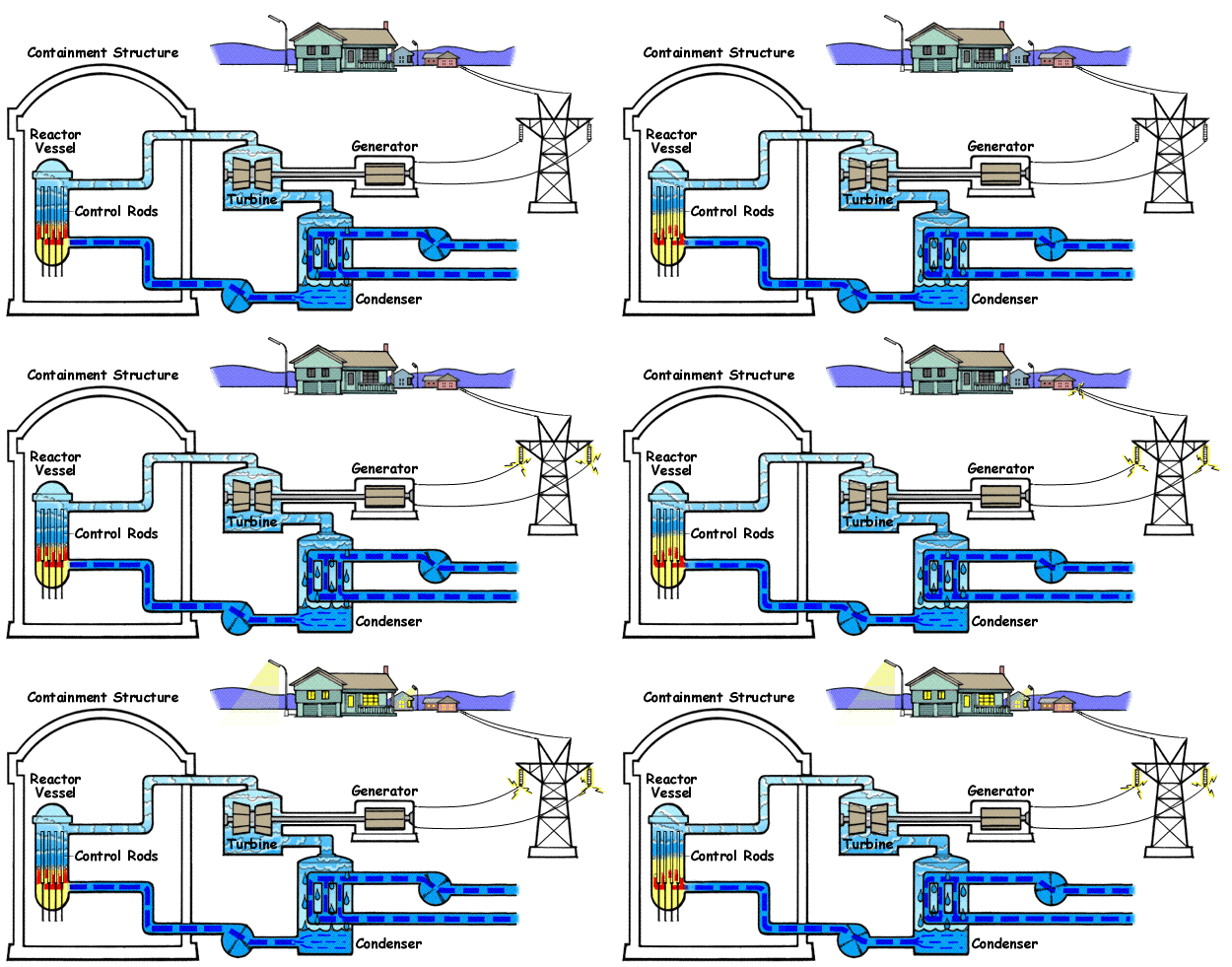
- Boiling Water Reactor- One reactor that changes water density
and temperature to produce energy (usually for electricity) Radioactive
water comes in direct contact with turbine, but not with environment.http://www.nrc.gov/images/reading-rm/basic-ref/students/student-bwr.gif
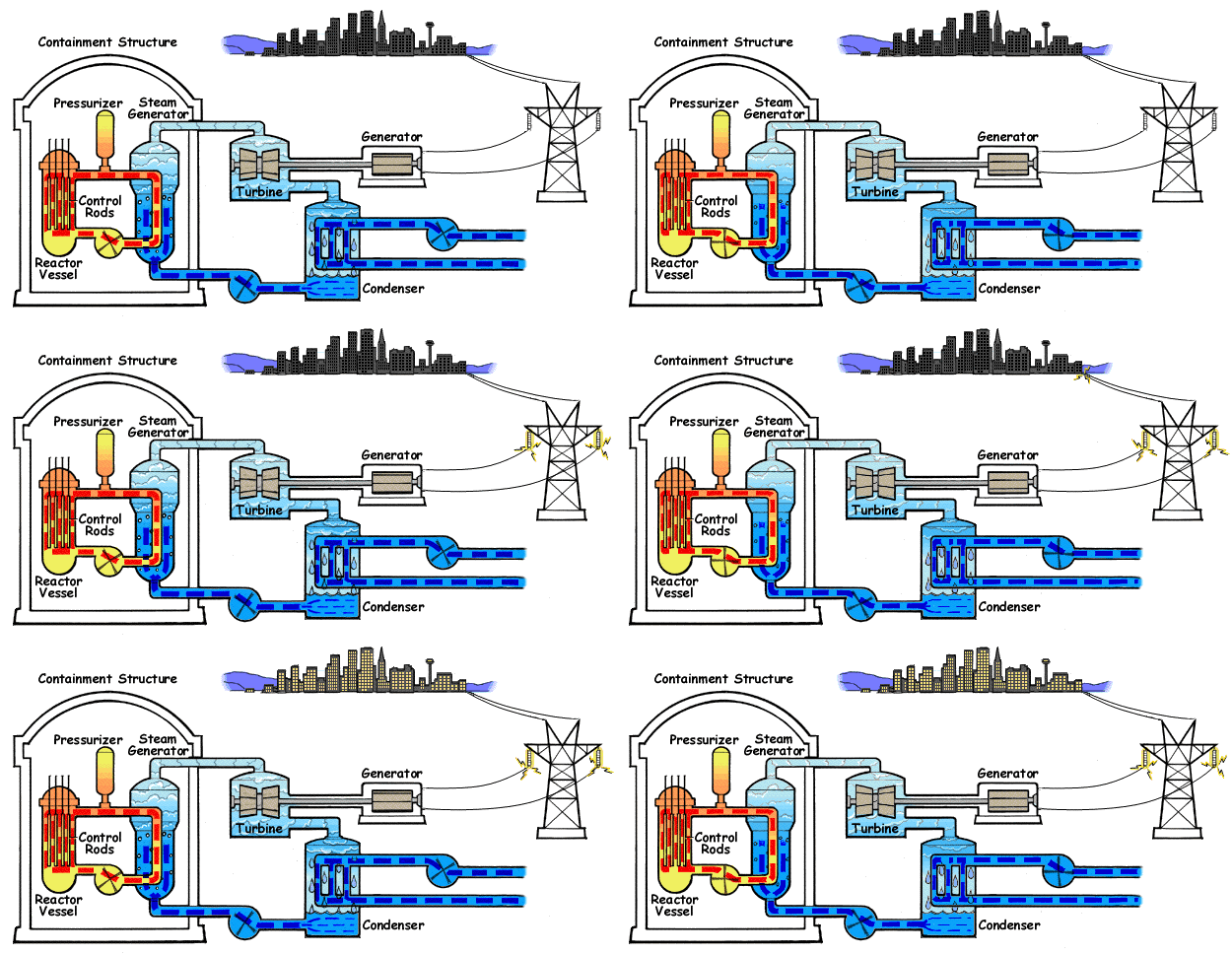
- Pressurized Water Reactor- A thermal reactor where
steam is produced through heat exchange rather than the core so that
radioactive water does not come into direct contact with the turbine (also
usually for electricity)https://upload.wikimedia.org/wikipedia/commons/a/a0/PressurizedWaterReactor.gif
- Containment- One of the most critical parts of a
nuclear power plant. Usually a building around the reactor
- Fuushima- Location of nuclear meltdown in Japan where
the cooling system failed
- TOKAMEK- First fusion test reactor in Russia
- ITER- International project involving building a fusion
reactor to test the concept. This is taking decades to build and is funded
by many nations, This is a ”TOKAMEK” type of fusion reactormeaning it means a
particular type of magnetic confinement to get plasma up to 150 degrees C
- Reactor Core- Part of the
reactor that contains the fuel and allows reactions to take place
Questions to think about
(from Tammie):
·
- How is a nuclear power plant like a coffee pot?
- ***How is electrical energy made from heat in general? How do turbines, steam, generators, and heat exchangers play a role? This corresponds to what you learned on your energy posters too!***
- · What is a heat exchanger and how does it work (in a very general sense)
- **** We can break apart nuclei to get energy (fission). We can combine nuclei to get energy (fusion).How can that be? It would seem that we should be able to get energy out only one way or the other – putting things together or taking them apart. What gives? Hint: http://hyperphysics.phy-astr.gsu.edu/hbase/nucene/nucbin.html http://chemed.chem.purdue.edu/genchem/topicreview/bp/ch23/graphics/23_7fig.gif
Just FYI from the
Smithsonian, “The Kola Superdeep Borehole was just 9 inches in diameter,
but at 40,230 feet (12,262 meters) reigns as the deepest hole. It took almost
20 years to reach that 7.5-mile depth—only half the distance or less to the
mantle. Among the more interesting discoveries: microscopic plankton fossils
found at four miles down. The Kola hole was abandoned in 1992 when drillers
encountered higher-than-expected temperatures—356 degrees Fahrenheit, not the
212 degrees that had been mapped.”


No comments:
Post a Comment